
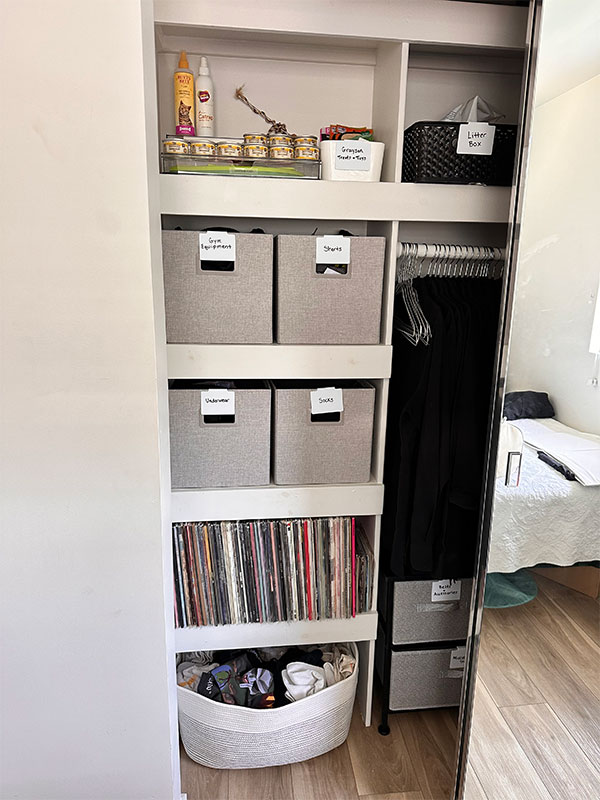
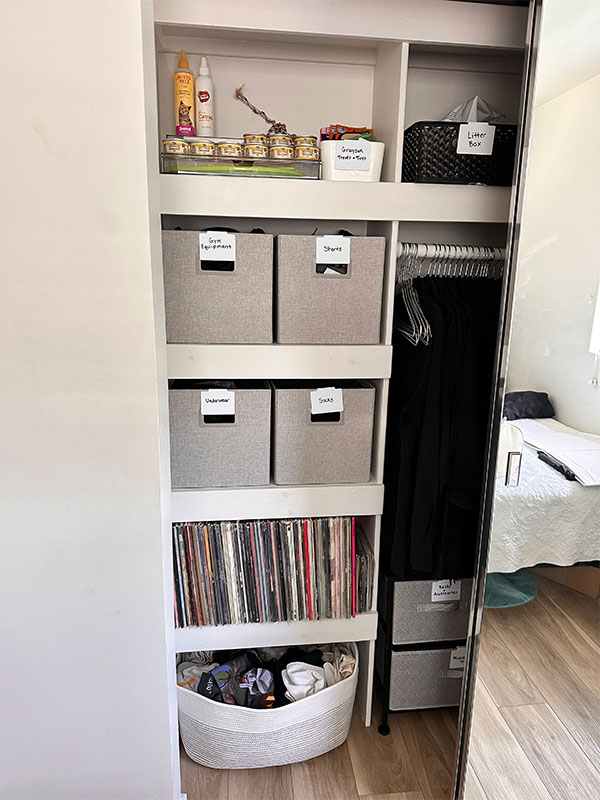
Let's be honest about closets. The internet wants you to believe that closet organization requires a walk-in the size of a studio apartment, matching wooden hangers, and a wardrobe that looks like a curated boutique. Meanwhile, you're staring at a standard reach-in closet stuffed with fifteen years of clothing decisions, half of which you're not sure about anymore.
Good news: you don't need a bigger closet. You need a better system inside the one you have. At Sorted, our Sorters transform closets every day — and the results have nothing to do with spending thousands on a custom build. They come from editing ruthlessly, using the right hangers, and creating zones that match how you actually get dressed.
Want a Pro to Transform Your Closet? Start With a $25 Consult.
A Sorted Sorter will walk through your closet on a 25-minute Zoom video call, assess your space, and create a personalized plan — including what products to buy and how to maximize every inch.
Fully refundable. No commitment.
Step 1: The Closet Edit (This Is Where the Magic Happens)
Every closet transformation starts with a ruthless edit. Take every single item out of your closet — every hanger, every shelf item, every shoe — and lay it all on your bed or floor.
This is uncomfortable. Your bed will be covered. The room will look worse before it looks better. That's by design. When everything is out and visible, you can see the full scope of what you own, and you'll immediately notice patterns: duplicate black tops, jeans you haven't worn in two years, workout clothes you wore once.
Sort every item into one of four groups:
- Keep: You wear it regularly, it fits, and it makes you feel good
- Donate: It's in good condition but hasn't been worn in 6+ months
- Trash/Recycle: Stained, damaged, worn out, or missing pieces
- Maybe: You're genuinely unsure (we'll deal with this pile in a moment)
For the "maybe" pile: put these items in a bag, date it, and store it elsewhere for 30 days. If you don't go looking for a single item in that bag within the month, donate the whole thing without reopening it.
Pro Organizer Note: The edit is the step where having a professional alongside you makes the biggest difference. Our Sorters hear "I could never have let go of this much on my own" after almost every closet session. A second person changes the decision-making dynamic entirely.
Step 2: Switch to Velvet Hangers (This Alone Changes Everything)
If you do one thing from this entire guide, make it this: replace every hanger in your closet with slim velvet hangers. This single swap can reclaim 15-30% of your hanging space.
Standard plastic and wooden hangers are thick and bulky. They take up disproportionate space on the rod and allow clothes to slip, slide, and bunch. Velvet hangers are dramatically thinner, and their textured surface grips fabric, which means your clothes stay in place and hang flat.
The visual difference is immediate. Where you previously had clothes crammed together and fighting for space, you'll suddenly have breathing room. You can see every item. Putting laundry away becomes easier. Getting dressed in the morning stops being a frustration.
Step 3: Create Zones That Match How You Get Dressed
Once your edit is done and your hangers are switched, organize your closet into zones based on how you actually use your wardrobe:
- Everyday zone: The items you reach for most — work clothes, casual favorites, go-to outfits. These go at eye level, front and center
- Occasion zone: Dressier items, suits, evening wear. These can go higher or to one side
- Seasonal zone: Off-season items like heavy coats or summer dresses. Top shelf, storage bins, or another closet entirely
- Workout/lounge zone: Activewear and loungewear grouped together
Within each zone, group by type (all tops together, all pants together, all dresses together) and then by color within each type. This sounds like overkill, but it makes finding specific items effortless and makes getting dressed genuinely faster.
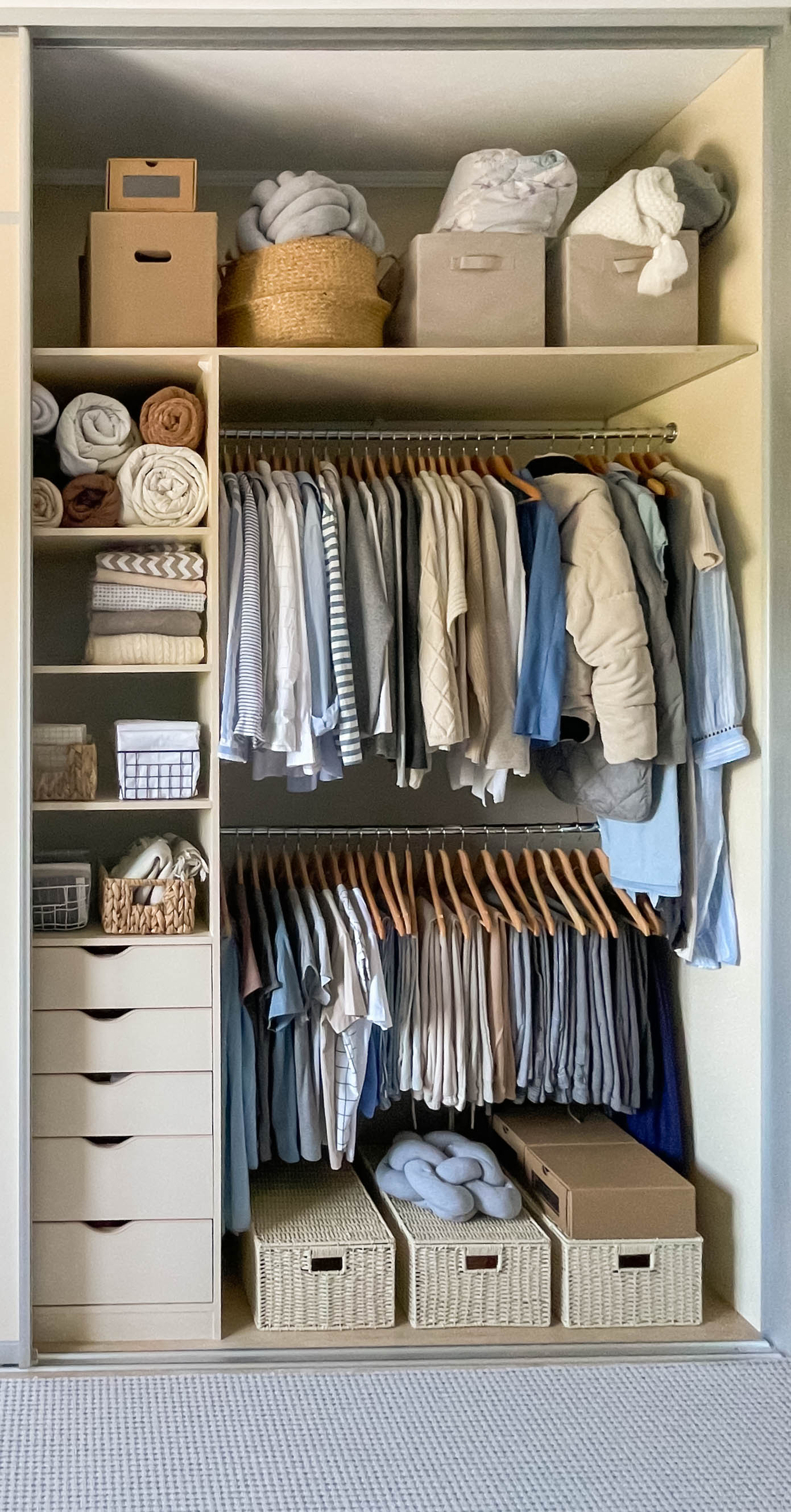
Step 4: Maximize Vertical and Floor Space
Most closets waste significant space above and below the hanging rod. Here's how to reclaim it:
- Double hang: If you have tall single-hang space, add a second lower rod for shirts and shorter items — this literally doubles your hanging capacity
- Shelf dividers: Use shelf dividers for folded items like sweaters and jeans so stacks don't topple
- Over-the-door organizers: The back of your closet door is prime real estate for shoes, accessories, scarves, or belts
- Floor storage: Use stackable shoe racks or low bins on the closet floor for shoes and bags
- Top shelf bins: Use labeled bins on the top shelf for seasonal items, hats, and accessories you don't reach for daily
Step 5: The Closet Maintenance System
A well-organized closet maintains itself if you follow two simple rules:
- The One-In-One-Out Rule: Every time you buy a new piece of clothing, remove one from your closet. This keeps the volume constant
- The Reverse Hanger Trick: At the start of each season, turn all your hangers backward. Each time you wear something, flip the hanger forward. After three months, anything still backward hasn't been worn — and it's a candidate for donation
These two habits cost nothing, take no time, and prevent your closet from ever reverting to chaos.
Professional Closet Organization: What to Expect
A typical Sorted closet session runs 3-5 hours. Your Sorter handles the full edit, switches hangers, creates zones, maximizes unused space, and labels everything. Many clients say it's one of the most impactful organizing sessions they book — because you interact with your closet twice a day, every single day.
- Book a $25 virtual consult — walk through your closet on Zoom, discuss goals, get a personalized plan
- Receive your product recommendations — exactly what hangers, bins, and tools to buy
- Schedule your closet transformation — in-home, on your timeline
Browse Sorters and Get Started
This post is part of our room-by-room home organization guide.
Ready to Get Sorted?
Stop spending weekends fighting clutter. Our professional organizers handle the heavy lifting so you can enjoy your space.
Fully refundable • No commitment • Book as needed
Already a customer or already booked a consult? Text us at (213) 523-7678
Frequently Asked Questions
How do I organize a small closet with lots of clothes?
Start with a ruthless edit to reduce volume, switch to slim velvet hangers to reclaim space, and use double-hang rods and vertical organizers to maximize every inch.
What are the best hangers for closet organization?
Slim velvet hangers. They save 15–30% of rod space and keep clothes from slipping. A single matching color creates a clean look.
How long does a professional closet organization session take?
Most closet transformations take 3–5 hours with a Sorter, depending on closet size and how much editing is needed.
How does Sorted work?
Start with a 25-minute Zoom consultation with the Sorter of your choosing. They’ll assess your space, create a plan, and give you a clear cost estimate. Every Sorter sets their own hourly rate with a 3-hour minimum. Book your consultation to get started.
.svg)
